
Core Drilling for Commercial MEP Penetrations: Jobsite Planning and Structural Safety in Kansas City
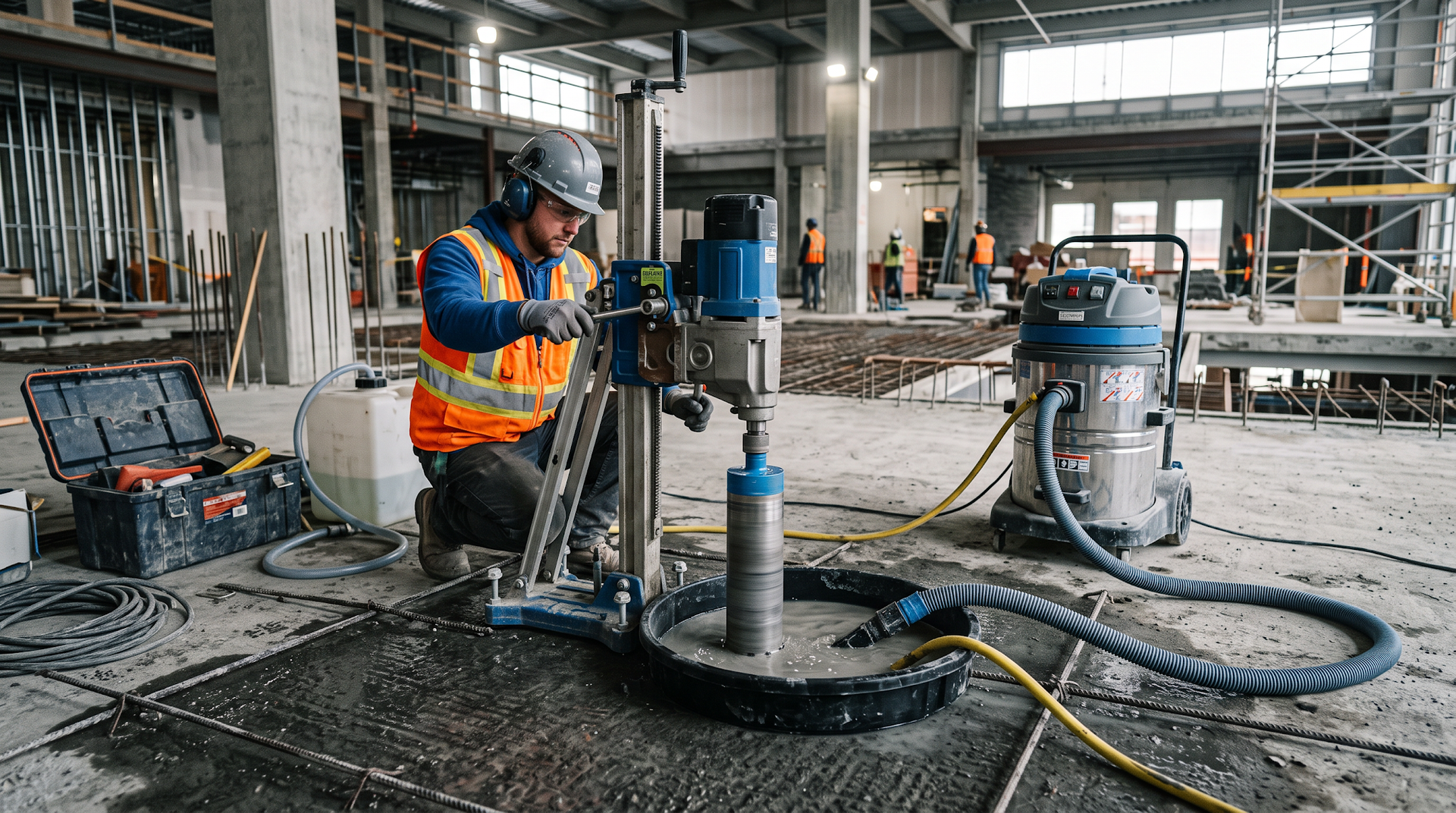
Layout Coordination for Mechanical, Electrical, and Plumbing Penetrations Commercial tenant improvements, industrial retrofits, and new multi-story builds require clean circular openings through solid concrete floors and walls. Mechanical, electrical, and plumbing (MEP) trades depend on accurate penetrations to route sanitary waste lines, chilled water loops, conduit runs, and fire suppression mains without damaging structural integrity. When running commercial penetrations across jobsites in Kansas City, early field coordination between the concrete cutting specialist and the mechanical contractor prevents field re-drilling, costly change orders, and schedule delays. Diamond core drilling provides clean, smooth-walled circular cuts through heavily reinforced concrete, precast planks, and masonry walls without the structural vibration caused by hammer drills. Key Takeaways: Diamond core drilling delivers clean cylindrical penetrations from 0.5 inches up to 66 inches in diameter through reinforced concrete without micro-fracturing surrounding materials. Scanning concrete with Ground Penetrating Radar (GPR) prior to drilling is critical to locate embedded conduit, post-tension cables, and structural rebar. Effective slurry containment and electric or hydraulic drilling rigs protect occupied tenant spaces below and keep indoor commercial projects safe. Scanning Before Drilling: Locating Embedded Conduits and Post-Tension Cables Drilling blind into elevated slabs or post-tensioned floors is one of the highest-risk activities on a commercial jobsite. Hitting a live high-voltage electrical conduit causes catastrophic arc flash hazards and immediate project shutdowns. Severing an unbonded post-tension cable can cause explosive structural failure and slab blowout. Ground Penetrating Radar on Elevated Slabs Before an operator mounts a core drill stand to a slab, non-destructive Ground Penetrating Radar (GPR) scanning identifies hidden obstructions within the concrete matrix. GPR scans reveal: Post-Tension Tendons: Depth and live run path across bays. Rebar Grids: Primary reinforcing steel layers and structural stirrups. Embedded Conduits: PVC, rigid metal conduit, and radiant heating tubing cast directly into the slab. Sub-slab Voids: Settlement pockets and air gaps beneath ground-supported slabs. Critical Clearance and Structural Anchoring Once targets are marked in bright chalk or marker on the slab surface, layout adjustments can be made before drilling begins. If a 6-inch plumbing core conflicts directly with a main rebar bundle, shifting the core location a few inches with the structural engineer's approval saves time and maintains floor capacity. Core Drilling in Practice: Bit Selection, Diameters, and Depth Diamond core drilling uses hollow steel cylindrical barrels tipped with industrial diamond segments welded to the cutting rim. Water cools the cutting head and flushes out concrete slurry as the bit rotates and advances through the slab. Small-Diameter Conduit Openings vs. Large-Diameter Utility Runs Different trades require specific hole dimensions. A 1-inch or 2-inch bit handles low-voltage data cables and single electrical runs. Meanwhile, commercial HVAC ductwork, commercial sewer mains, and grease lines often require large-diameter openings ranging from 12 inches up to 66 inches.
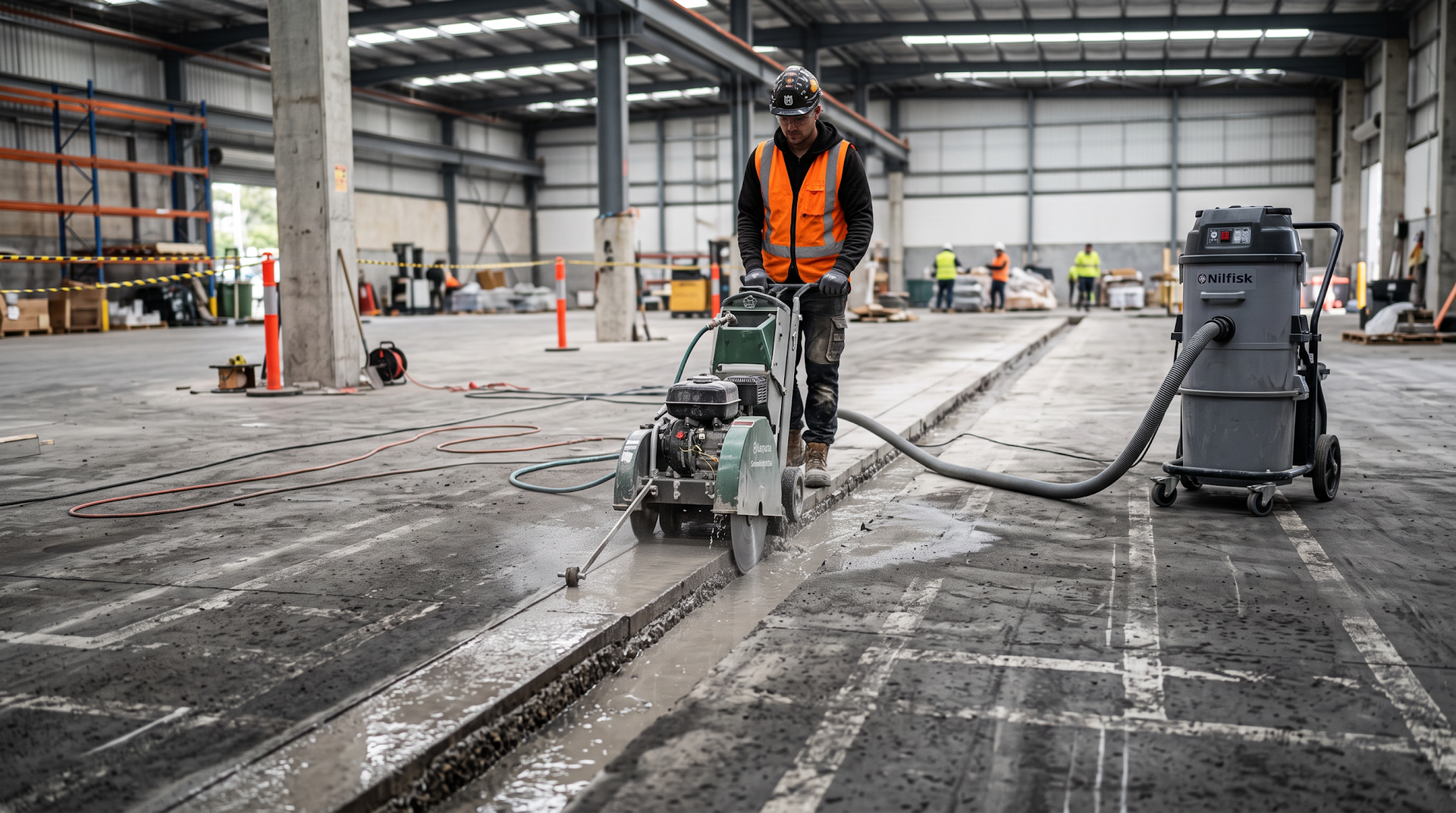
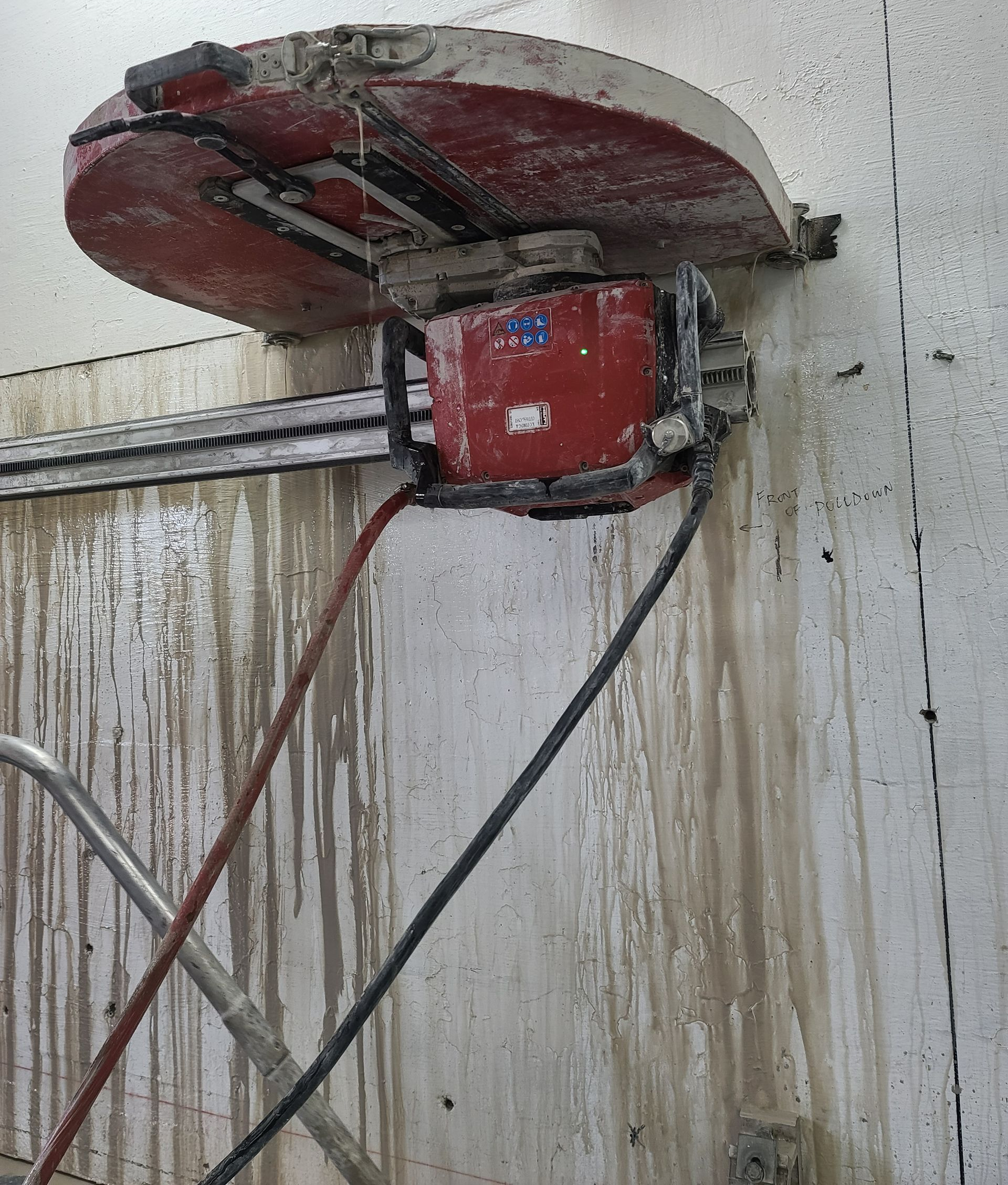
Planning Indoor Slab Trenching for Winter Facility Retrofits Winter shutdowns and year-end maintenance windows offer ideal timing for industrial plants, commercial warehouses, and healthcare facilities to upgrade underground utilities. Installing new production machinery, routing sanitary lines for restyled restrooms, or adding sub-slab electrical conduits requires cutting and removing sections of reinforced concrete floor slabs. Performing concrete flat sawing indoors during cold Midwestern weather requires careful operational planning. Facility managers and general contractors across Kansas City must coordinate zero-emission saw power, indoor dust and slurry management, and rapid slab removal to complete floor trenching before production restarts. Key Takeaways: Indoor concrete slab sawing relies on electric, hydraulic, or battery walk-behind saws to eliminate carbon monoxide hazards in enclosed facilities. Water containment, wet-cutting slurry extraction, and HEPA-filtered dust extraction prevent airborne silica and keep indoor air quality clean. Combining slab sawing with concrete chain sawing cuts neat, square corners without overcutting structural floor boundaries. Power Plant Selection: Eliminating Exhaust Fumes Indoors Standard gas and diesel walk-behind flat saws generate dangerous exhaust gases that accumulate rapidly inside enclosed commercial spaces. For indoor winter trenching, specialized electric and hydraulic saws deliver equivalent horsepower without toxic emissions. Electric and Hydraulic Concrete Saws for Confined Spaces Professional cutting contractors deploy 480V 3-phase electric slab saws or remote hydraulic power packs placed outside the facility. These heavy-duty flat saws cut through 12-inch, 18-inch, or deeper commercial concrete floors without creating carbon monoxide risks for building occupants or other trades working in adjacent bays. Slurry Recovery and Dry Dust Collection Systems OSHA Table 1 regulations demand strict crystalline silica control during all concrete cutting operations. During indoor slab sawing, two primary containment methods protect the building interior: Wet-Cutting with Immediate Slurry Vacuuming: Water fed directly to the diamond blade suppresses 100% of airborne dust. Auto-tracking wet vacuums collect concrete slurry instantly at the blade guard. Dry Cutting with Cyclonic HEPA Extractors: For facilities where moisture must be strictly avoided (such as dry food processing or live electrical server rooms), high-cfm vacuum shrouds capture dry dust particles before they disperse. Slab Sawing in Practice: Depth of Cut, Overcut Prevention, and Clean Removal Trenching through a concrete floor is more than simply running a saw across the room. Proper execution requires systematic cuts that facilitate clean breakout and preserve adjacent slab edges.