
Core Drilling for Commercial MEP Penetrations: Jobsite Planning and Structural Safety in Kansas City
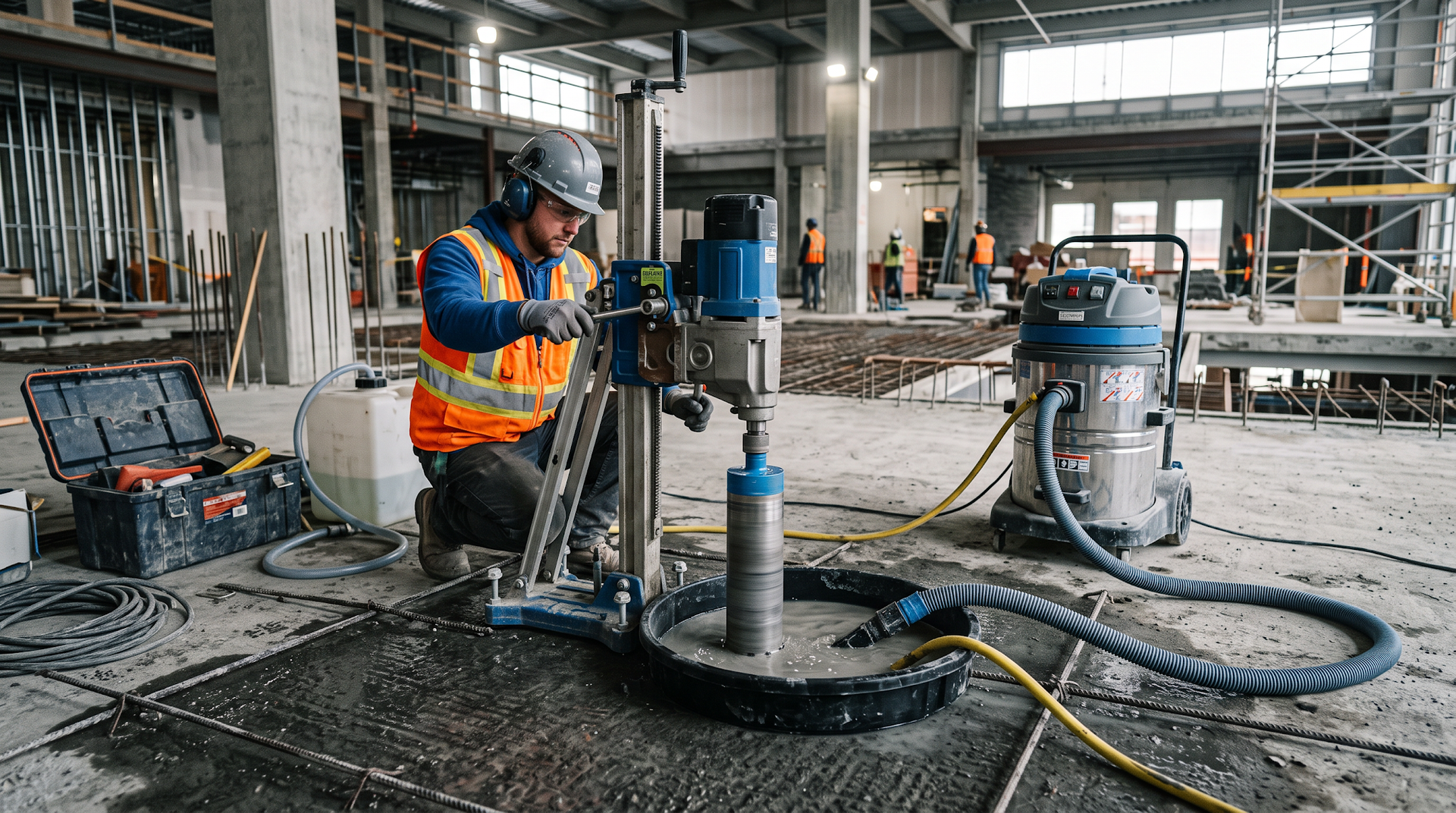
Layout Coordination for Mechanical, Electrical, and Plumbing Penetrations Commercial tenant improvements, industrial retrofits, and new multi-story builds require clean circular openings through solid concrete floors and walls. Mechanical, electrical, and plumbing (MEP) trades depend on accurate penetrations to route sanitary waste lines, chilled water loops, conduit runs, and fire suppression mains without damaging structural integrity. When running commercial penetrations across jobsites in Kansas City, early field coordination between the concrete cutting specialist and the mechanical contractor prevents field re-drilling, costly change orders, and schedule delays. Diamond core drilling provides clean, smooth-walled circular cuts through heavily reinforced concrete, precast planks, and masonry walls without the structural vibration caused by hammer drills. Key Takeaways: Diamond core drilling delivers clean cylindrical penetrations from 0.5 inches up to 66 inches in diameter through reinforced concrete without micro-fracturing surrounding materials. Scanning concrete with Ground Penetrating Radar (GPR) prior to drilling is critical to locate embedded conduit, post-tension cables, and structural rebar. Effective slurry containment and electric or hydraulic drilling rigs protect occupied tenant spaces below and keep indoor commercial projects safe. Scanning Before Drilling: Locating Embedded Conduits and Post-Tension Cables Drilling blind into elevated slabs or post-tensioned floors is one of the highest-risk activities on a commercial jobsite. Hitting a live high-voltage electrical conduit causes catastrophic arc flash hazards and immediate project shutdowns. Severing an unbonded post-tension cable can cause explosive structural failure and slab blowout. Ground Penetrating Radar on Elevated Slabs Before an operator mounts a core drill stand to a slab, non-destructive Ground Penetrating Radar (GPR) scanning identifies hidden obstructions within the concrete matrix. GPR scans reveal: Post-Tension Tendons: Depth and live run path across bays. Rebar Grids: Primary reinforcing steel layers and structural stirrups. Embedded Conduits: PVC, rigid metal conduit, and radiant heating tubing cast directly into the slab. Sub-slab Voids: Settlement pockets and air gaps beneath ground-supported slabs. Critical Clearance and Structural Anchoring Once targets are marked in bright chalk or marker on the slab surface, layout adjustments can be made before drilling begins. If a 6-inch plumbing core conflicts directly with a main rebar bundle, shifting the core location a few inches with the structural engineer's approval saves time and maintains floor capacity. Core Drilling in Practice: Bit Selection, Diameters, and Depth Diamond core drilling uses hollow steel cylindrical barrels tipped with industrial diamond segments welded to the cutting rim. Water cools the cutting head and flushes out concrete slurry as the bit rotates and advances through the slab. Small-Diameter Conduit Openings vs. Large-Diameter Utility Runs Different trades require specific hole dimensions. A 1-inch or 2-inch bit handles low-voltage data cables and single electrical runs. Meanwhile, commercial HVAC ductwork, commercial sewer mains, and grease lines often require large-diameter openings ranging from 12 inches up to 66 inches.
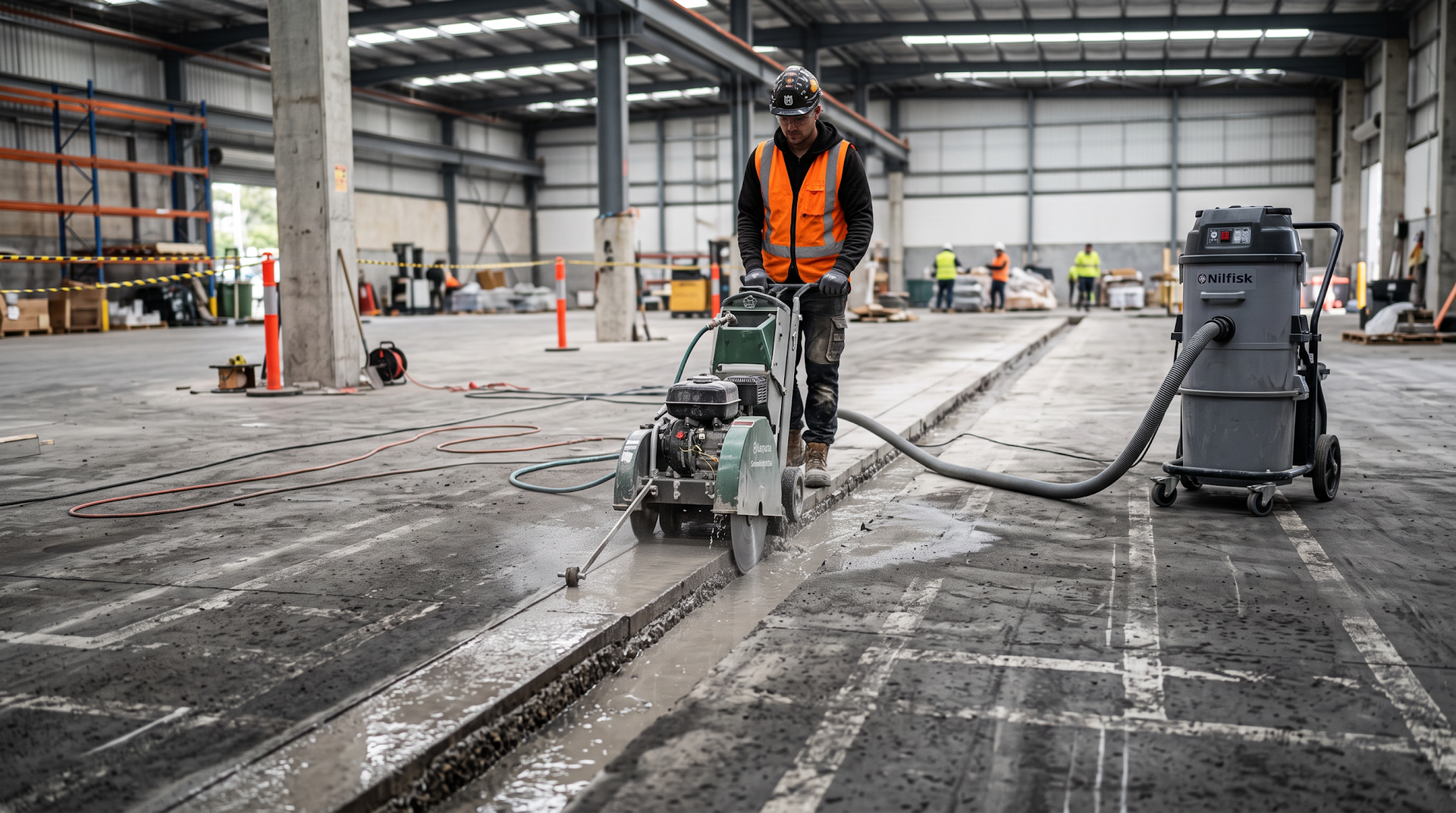
Planning Indoor Slab Trenching for Winter Facility Retrofits Winter shutdowns and year-end maintenance windows offer ideal timing for industrial plants, commercial warehouses, and healthcare facilities to upgrade underground utilities. Installing new production machinery, routing sanitary lines for restyled restrooms, or adding sub-slab electrical conduits requires cutting and removing sections of reinforced concrete floor slabs. Performing concrete flat sawing indoors during cold Midwestern weather requires careful operational planning. Facility managers and general contractors across Kansas City must coordinate zero-emission saw power, indoor dust and slurry management, and rapid slab removal to complete floor trenching before production restarts. Key Takeaways: Indoor concrete slab sawing relies on electric, hydraulic, or battery walk-behind saws to eliminate carbon monoxide hazards in enclosed facilities. Water containment, wet-cutting slurry extraction, and HEPA-filtered dust extraction prevent airborne silica and keep indoor air quality clean. Combining slab sawing with concrete chain sawing cuts neat, square corners without overcutting structural floor boundaries. Power Plant Selection: Eliminating Exhaust Fumes Indoors Standard gas and diesel walk-behind flat saws generate dangerous exhaust gases that accumulate rapidly inside enclosed commercial spaces. For indoor winter trenching, specialized electric and hydraulic saws deliver equivalent horsepower without toxic emissions. Electric and Hydraulic Concrete Saws for Confined Spaces Professional cutting contractors deploy 480V 3-phase electric slab saws or remote hydraulic power packs placed outside the facility. These heavy-duty flat saws cut through 12-inch, 18-inch, or deeper commercial concrete floors without creating carbon monoxide risks for building occupants or other trades working in adjacent bays. Slurry Recovery and Dry Dust Collection Systems OSHA Table 1 regulations demand strict crystalline silica control during all concrete cutting operations. During indoor slab sawing, two primary containment methods protect the building interior: Wet-Cutting with Immediate Slurry Vacuuming: Water fed directly to the diamond blade suppresses 100% of airborne dust. Auto-tracking wet vacuums collect concrete slurry instantly at the blade guard. Dry Cutting with Cyclonic HEPA Extractors: For facilities where moisture must be strictly avoided (such as dry food processing or live electrical server rooms), high-cfm vacuum shrouds capture dry dust particles before they disperse. Slab Sawing in Practice: Depth of Cut, Overcut Prevention, and Clean Removal Trenching through a concrete floor is more than simply running a saw across the room. Proper execution requires systematic cuts that facilitate clean breakout and preserve adjacent slab edges.

Commercial construction and urban redevelopment across Kansas City are moving at an unprecedented pace. From major downtown corridor modernizations and historic building adaptations to industrial warehouse expansions, commercial concrete cutting serves as the foundational specialty trade that keeps projects moving forward without costly structural delays. Navigating complex structural concrete modifications requires rigorous safety protocols, diamond tooling, and verified utility scanning to protect jobsite timelines. Executive Summary: Modern commercial construction and renovation across Kansas City demand controlled concrete cutting techniques to modify heavy slabs and load-bearing walls safely. Utilizing specialized diamond blades, wet-cutting systems, and ground-penetrating radar scanning eliminates structural risks and utility strikes before drilling begins. Partnering with a dedicated specialty contractor ensures accurate execution, strict schedule adherence, and dependable OSHA compliance. Key Takeaways for General Contractors Method Selection Dictates Safety: Matching the correct tool—whether a walk-behind concrete saw, wall saw, or core drill—prevents micro-fractures and maintains structural integrity. Pre-Cut Scanning Is Essential: Ground Penetrating Radar (GPR) must verify post-tension cables, rebar, and conduit locations prior to core drilling or slab penetration. Dust and Fume Control: Electric, hydraulic, and slurry-managed equipment meet OSHA Table 1 silica standards for indoor and occupied facility renovations. Key Questions Answered What is commercial concrete cutting? Commercial concrete cutting is the controlled removal, sawing, or drilling of reinforced concrete slabs, masonry, and asphalt using high-grade diamond tools, preventing structural shock and micro-cracking. How does core drilling differ from standard concrete sawing? Core drilling creates circular openings from small pipe diameters up to several feet wide for MEP utilities, while concrete sawing creates linear cuts for expansion joints, trenches, or structural doorways. Why is GPR scanning required before cutting concrete? Ground Penetrating Radar locates embedded rebar, post-tension cables, and live electrical conduits within the slab, preventing costly utility strikes and structural failure. The Rise of Commercial Concrete Cutting in Modern Construction Over the past several decades, commercial building requirements across the Midwest have shifted dramatically. In earlier eras of construction, demolition and structural alterations relied on heavy impact tools such as jackhammers, wrecking balls, and hydraulic breakers. While effective at breaking concrete apart, these percussive methods sent severe shockwaves through building foundations, frequently causing unwanted spider-cracking, rebar debonding, and structural instability. As architectural designs grew more complex and historic renovation projects became standard in Kansas City, the demand for non-impact, vibration-free concrete modification expanded. Modern diamond-tipped equipment cuts cleanly through the hardest aggregate and heavily reinforced concrete without disturbing surrounding structural elements. Today, specialty concrete cutting forms an integral phase of nearly every major commercial development, including: Adaptive Reuse Projects: Converting historic brick and concrete warehouses into modern multi-family housing, retail venues, or tech offices. Industrial Logistics Facilities: Modifying thick warehouse floor slabs for automated guided vehicles (AGVs), conveyor footings, and heavy machinery tie-downs. Healthcare and Cleanroom Facilities: Installing plumbing and HVAC lines in occupied hospitals where dust, fumes, and noise must remain strictly controlled. Municipal and Transit Infrastructure: Modifying bridge decks, road surfaces, retaining walls, and utility vaults under tight urban timelines. Core Practices: Concrete Saw and Core Drilling in Practice Achieving clean results on commercial jobsites begins with choosing the exact method designed for the task. Every slab thickness, reinforcement pattern, and site environment presents unique operational constraints. 1. Slab and Flat Sawing Slab sawing, also called flat sawing, handles horizontal surfaces such as roads, bridge decks, concrete floors, and parking pavements. Walk-behind saws equipped with diamond blades slice through cured concrete and rebar to prepare utility trenches, create expansion joints, or isolate damaged sections for removal. In outdoor settings, diesel and gas-powered saws deliver the horsepower required to cut slabs up to 24 inches thick. For indoor warehouse or retail renovation, electric and hydraulic flat saws eliminate toxic carbon monoxide emissions while maintaining high cutting output. 2. Core Drilling Core drilling is the standard solution when circular penetrations are needed for mechanical, electrical, and plumbing (MEP) systems. Operators secure drill rigs to floors or walls, driving hollow, cylindrical diamond core bits through reinforced slabs. Coring applications range from 1/2-inch holes for communication cables up to 60-inch diameter penetrations for massive HVAC ductwork, drain lines, and structural anchors. Unlike percussion drilling, diamond core drilling produces smooth, round openings that eliminate the need for extensive patching and masonry cleanup. 3. Wall and Track Sawing When vertical concrete walls, precast panels, or steep concrete retaining structures require openings, wall sawing is the preferred method. A rigid track is anchored to the wall, guiding a high-torque saw along exact straight lines. This technique creates new doors, windows, elevator shafts, and mechanical accessways without damaging load-bearing structural integrity. 4. Concrete Grinder and Surface Preparation After concrete removal or modification, floor surfaces often require leveling and smoothing. Utilizing a commercial concrete grinder removes surface imperfections, epoxy coatings, adhesives, and uneven joints. Surface grinding prepares slabs for new flooring installations or creates polished industrial concrete floors that withstand heavy forklift traffic. Method Selection Matrix for Commercial Contractors
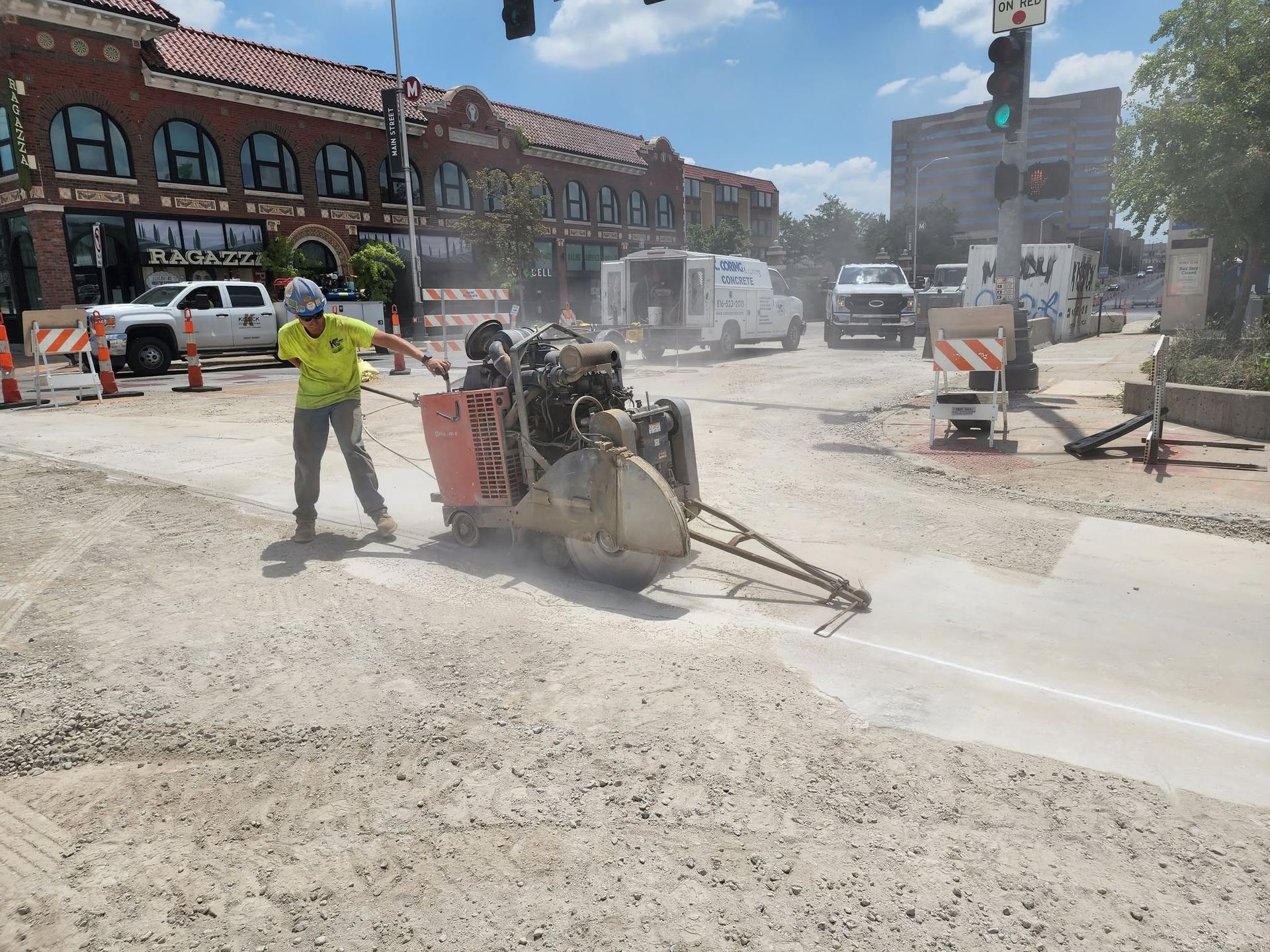
Commercial buildings across the Kansas City metropolitan area are moving at a rapid pace. Between infrastructure upgrades, transit expansions, and major commercial renovations, general contractors face tight deadlines and complex jobsite challenges. When updating existing slabs, adding utility lines, or creating structural openings, choosing the right concrete cutting approach makes all the difference in project safety and timeline execution. Concrete saw cutting is the controlled mechanical process of sawing, coring, or removing portions of cured or green concrete without damaging surrounding structural elements. Using diamond-tipped blades and specialized saws, trained operators create clean openings for plumbing trenches, electrical conduits, doorway expansions, and expansion joints. Executive Summary Modern commercial renovations and infrastructure projects across Kansas City require controlled concrete cutting to modify slabs and structures safely. Utilizing diamond blades, wet-cutting systems, and ground-penetrating radar prevents unexpected structural damage and utility strikes. Partnering with an experienced specialty contractor ensures accurate project execution, tight schedule adherence, and full OSHA compliance. Key Takeaways for Project Managers Select the Right Method Early: Match slab sawing, core drilling, or wall sawing directly to the depth, layout, and structural load demands of your Kansas City project. Prioritize Pre-Cut Utility Scanning: Always conduct Ground Penetrating Radar (GPR) before making cuts to map rebar, post-tension cables, and live electrical conduits. Enforce OSHA Silica Standards: Require continuous wet-cutting water feed systems and high-efficiency dust management to maintain clean air and meet worker safety requirements. Key Questions Answered: What is concrete saw cutting? A controlled specialty construction process using diamond-tipped saws to cut structural openings, utility trenches, or expansion joints in reinforced concrete. When is slab sawing preferred? Slab sawing is ideal for horizontal flat surfaces such as warehouse floors, bridge decks, and highway pavement requiring trenches or section removals. The Mechanics Behind Concrete Saw Operations Understanding how a professional concrete saw cuts through reinforced stone and steel helps project teams plan efficient schedules. Unlike wood or metal blades that shear through material, diamond blades work through micro-abrasion. Industrial diamond crystals embedded in a metallic matrix grind through aggregate and rebar under high rotational torque. As the blade spins, the matrix slowly wears away, exposing fresh diamond edges to maintain cutting efficiency. Water feeds continuously flush away slurry and keep temperatures down, preventing blade warping and dangerous airborne crystalline silica clouds. For dry cutting or interior occupied buildings, dedicated HEPA extraction units capture fine dust at the source. Core Concrete Cutting Methods in Practice Every commercial jobsite presents unique physical constraints. A deep foundation cut requires different machinery than a shallow decorative control joint. Below is a breakdown of common cutting approaches utilized across commercial projects. 1. Slab Sawing (Flat Sawing) Slab saws, often referred to as flat saws, feature circular blades mounted on rigid walk-behind or ride-on chassis. Powered by electric, diesel, or hydraulic motors, flat saws cut horizontal concrete slabs, asphalt pavement, airport runways, and bridge surfaces. Contractors rely on slab sawing to open trenches for underground plumbing, mechanical piping, and electrical raceways. 2. Core Drilling Core drilling creates clean, round holes through concrete walls, floors, and ceilings. Diamond core bits range from small fractional diameters up to multi-foot openings for HVAC ducts, structural anchors, and plumbing penetrations. Because core drilling produces minimal vibration, it maintains the structural integrity of surrounding reinforced concrete. 3. Wall Sawing and Wire Sawing When vertical concrete walls, foundation footings, or precast panels need clean cuts for doorways, windows, or ventilation louvers, track-mounted wall saws provide straight lines. For massive concrete structures where blade reach is limited, diamond wire sawing threads continuous abrasive wire through heavy sections, slicing through thick mass concrete smoothly. 4. Robotic Brokk Demolition In confined spaces or structural removal projects where traditional heavy excavators cannot operate safely, remote-controlled Brokk demolition machines provide powerful breaking capability. Operators control the machine from a safe distance, reducing operator fatigue and jobsite hazards. Comparison of Concrete Modification Methods

Key Question Answered: What is concrete slab sawing, and when is it required on commercial job sites? Concrete slab sawing is a high-precision mechanical cutting method using diamond blades to cut flat horizontal surfaces such as floors, pavements, and bridge decks for utility trenching, expansion joints, or selective slab removal without causing structural micro-fractures. Planning utility installations, plumbing lines, or structural modifications on existing commercial concrete requires exact execution. For general contractors and facility managers handling projects across the Kansas City metro, professional concrete slab sawing in Kansas City ensures horizontal concrete surfaces are cut cleanly, quickly, and to specified depths without damaging the surrounding foundation. 📌 Key Takeaways (TL;DR) Precision Depth Control: Self-propelled diamond saws cut slabs up to 24+ inches thick cleanly, avoiding damage to adjacent foundation structures. Utility & Drainage Prep: Flat sawing prepares accurate trenches for plumbing, electrical conduit, and floor drains before follow-on trades arrive. Safety & Dust Management: Wet-cutting techniques and continuous water containment meet strict OSHA silica standards inside occupied commercial spaces. The Evolution and Rise of Precision Slab Sawing In past construction eras, opening a floor slab meant heavy jackhammering and pneumatic breaking. That brute-force method created major structural issues, including micro-cracking across sub-base layers and unpredictable jagged breaks that were difficult to patch. According to industry data on standard slab demolition benchmarks, uncontrolled concrete demolition drives up repair labor and material costs significantly compared to clean saw-cutting. Modern commercial builds require tighter tolerances. Electric and diesel-powered flat saws equipped with industrial diamond-tipped blades allow operators to make razor-sharp cuts at exact depths. This approach maintains structural integrity across the rest of the slab and provides straight edges that make pour-backs and patch work clean and cost-effective. Commercial Concrete Sawing in Practice: Methods and Technology Executing a flat sawing project involves several technical steps depending on site conditions, slab thickness, and indoor air quality requirements. A thorough contractor site prep guide details how proper planning prevents costly delays: Ground Penetrating Radar (GPR) Scanning: Before blade meets concrete, scanning identifies embedded rebar, post-tension cables, and live electrical conduits within the slab. Wet-Cutting Dust Suppression: Continuous water feed cools the blade and captures respirable crystalline silica at the source, meeting OSHA standards. Electric and Hydraulic Sawing for Indoor Spaces: Zero-emission electric saws operate safely inside occupied facilities like hospitals, grocery stores, and corporate offices. Diesel and Gas Road Sawing: High-horsepower saws handle outdoor concrete slabs, bridge decks, runways, and parking structures efficiently. Comparing Common Concrete Cutting Methods
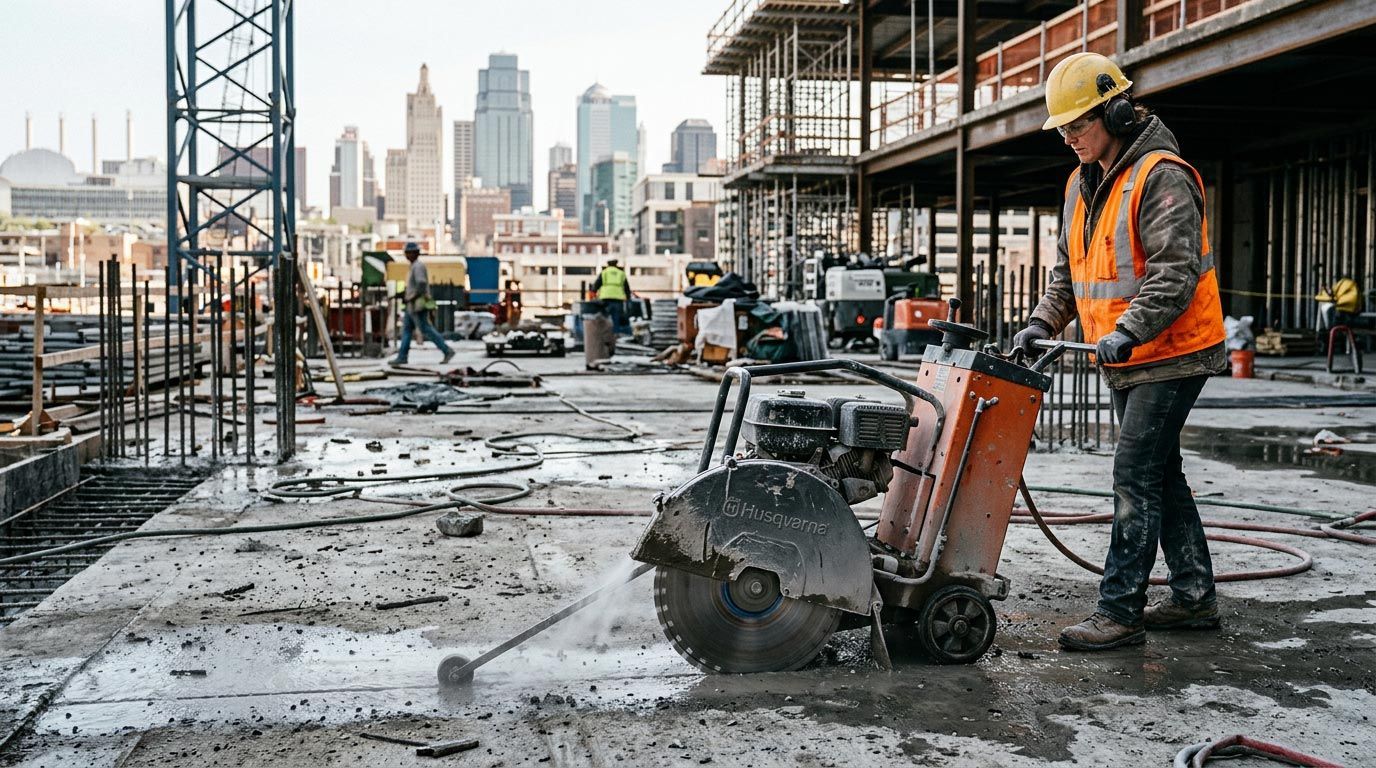
Navigating Commercial Concrete Modifications in Modern Construction Commercial building across the Kansas City metropolitan area is moving at a rapid pace. Between infrastructure upgrades, transit expansions, and major commercial renovations, general contractors face tight deadlines and complex jobsite challenges. When updating existing slabs, adding utility lines, or creating structural openings, choosing the right concrete cutting approach makes all the difference in project safety and timeline execution. Concrete saw cutting is the controlled mechanical process of sawing, coring, or removing portions of cured or green concrete without damaging surrounding structural elements. Using diamond-tipped blades and specialized saws, trained operators create clean openings for plumbing trenches, electrical conduits, doorway expansions, and expansion joints. Executive Summary Modern commercial renovations and infrastructure projects across Kansas City require controlled concrete cutting to modify slabs and structures safely. Utilizing diamond blades, wet-cutting systems, and ground-penetrating radar prevents unexpected structural damage and utility strikes. Partnering with an experienced specialty contractor ensures accurate project execution, tight schedule adherence, and full OSHA compliance. Key Takeaways for Project Managers Select the Right Method Early: Match slab sawing, core drilling, or wall sawing directly to the depth, layout, and structural load demands of your Kansas City project. Prioritize Pre-Cut Utility Scanning: Always conduct Ground Penetrating Radar (GPR) before making cuts to map rebar, post-tension cables, and live electrical conduits. Enforce OSHA Silica Standards: Require continuous wet-cutting water feed systems and high-efficiency dust management to maintain clean air and meet worker safety requirements. Key Questions Answered What is concrete saw cutting? A controlled specialty construction process using diamond-tipped saws to cut structural openings, utility trenches, or expansion joints in reinforced concrete. When is slab sawing preferred? Slab sawing is ideal for horizontal flat surfaces such as warehouse floors, bridge decks, and highway pavement requiring trenches or section removals. The Mechanics Behind Concrete Saw Operations Understanding how a professional concrete saw cuts through reinforced stone and steel helps project teams plan efficient schedules. Unlike wood or metal blades that shear through material, diamond blades work through micro-abrasion. Industrial diamond crystals embedded in a metallic matrix grind through aggregate and rebar under high rotational torque. As the blade spins, the matrix slowly wears away, exposing fresh diamond edges to maintain cutting efficiency. Water feeds continuously flush away slurry and keep temperatures down, preventing blade warping and dangerous airborne crystalline silica clouds. For dry cutting or interior occupied buildings, dedicated HEPA extraction units capture fine dust at the source. Core Concrete Cutting Methods in Practice Every commercial jobsite presents unique physical constraints. A deep foundation cut requires different machinery than a shallow decorative control joint. Below is a breakdown of common cutting approaches utilized across commercial projects. 1. Slab Sawing (Flat Sawing) Slab saws, often referred to as flat saws, feature circular blades mounted on rigid walk-behind or ride-on chassis. Powered by electric, diesel, or hydraulic motors, flat saws cut horizontal concrete slabs, asphalt pavement, airport runways, and bridge surfaces. Contractors rely on slab sawing to open trenches for underground plumbing, mechanical piping, and electrical raceways. 2. Core Drilling Core drilling creates clean, round holes through concrete walls, floors, and ceilings. Diamond core bits range from small fractional diameters up to multi-foot openings for HVAC ducts, structural anchors, and plumbing penetrations. Because core drilling produces minimal vibration, it maintains the structural integrity of surrounding reinforced concrete. 3. Wall Sawing and Wire Sawing When vertical concrete walls, foundation footings, or precast panels need clean cuts for doorways, windows, or ventilation louvers, track-mounted wall saws provide straight lines. For massive concrete structures where blade reach is limited, diamond wire sawing threads continuous abrasive wire through heavy sections, slicing through thick mass concrete smoothly. 4. Robotic Brokk Demolition In confined spaces or structural removal projects where traditional heavy excavators cannot operate safely, remote-controlled Brokk demolition machines provide powerful breaking capability. Operators control the machine from a safe distance, reducing operator fatigue and jobsite hazards.
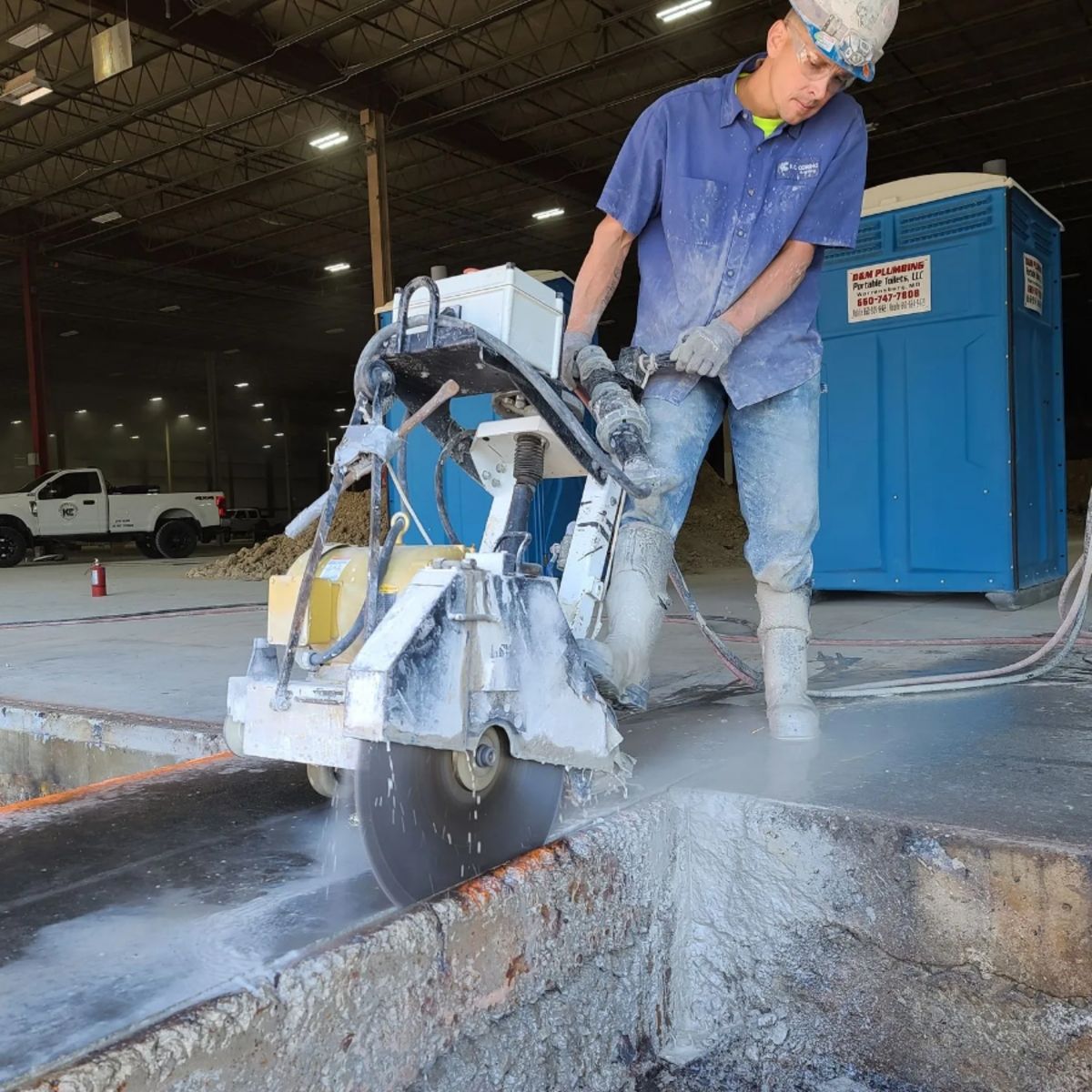
Learn how concrete slab sawing supports site prep, layout, and demo scheduling for contractors across Kansas City. Get the details before your next project.
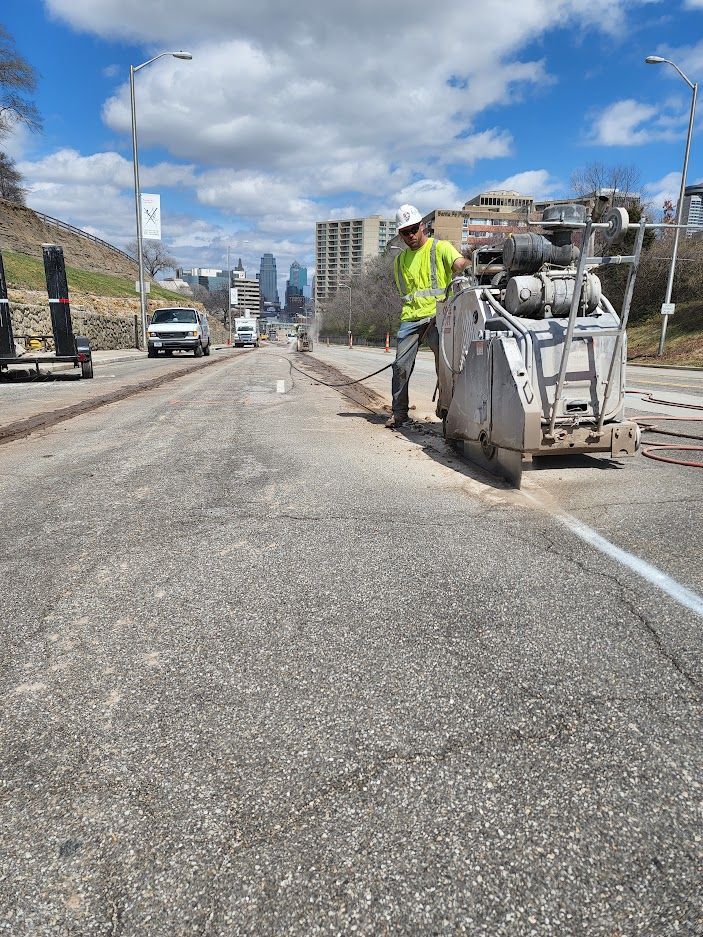
Planning concrete cutting for a Kansas City project? See why summer scheduling affects curing time, cost, and timelines, plus tips to avoid delays.
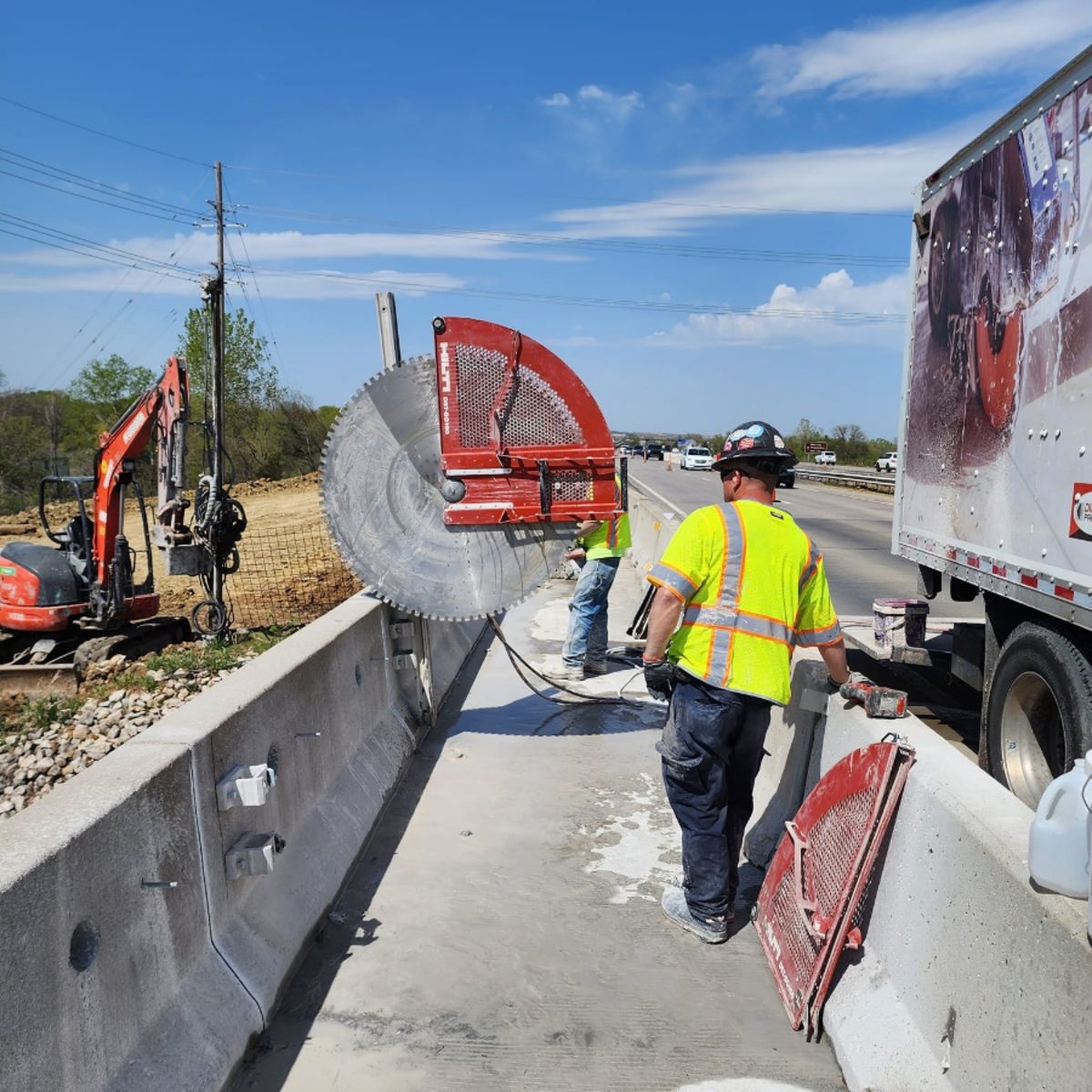
Before you schedule a concrete cutting job, know the right questions to ask. KC Coring walks Kansas City contractors through methods, GPR scanning, site prep, and more.
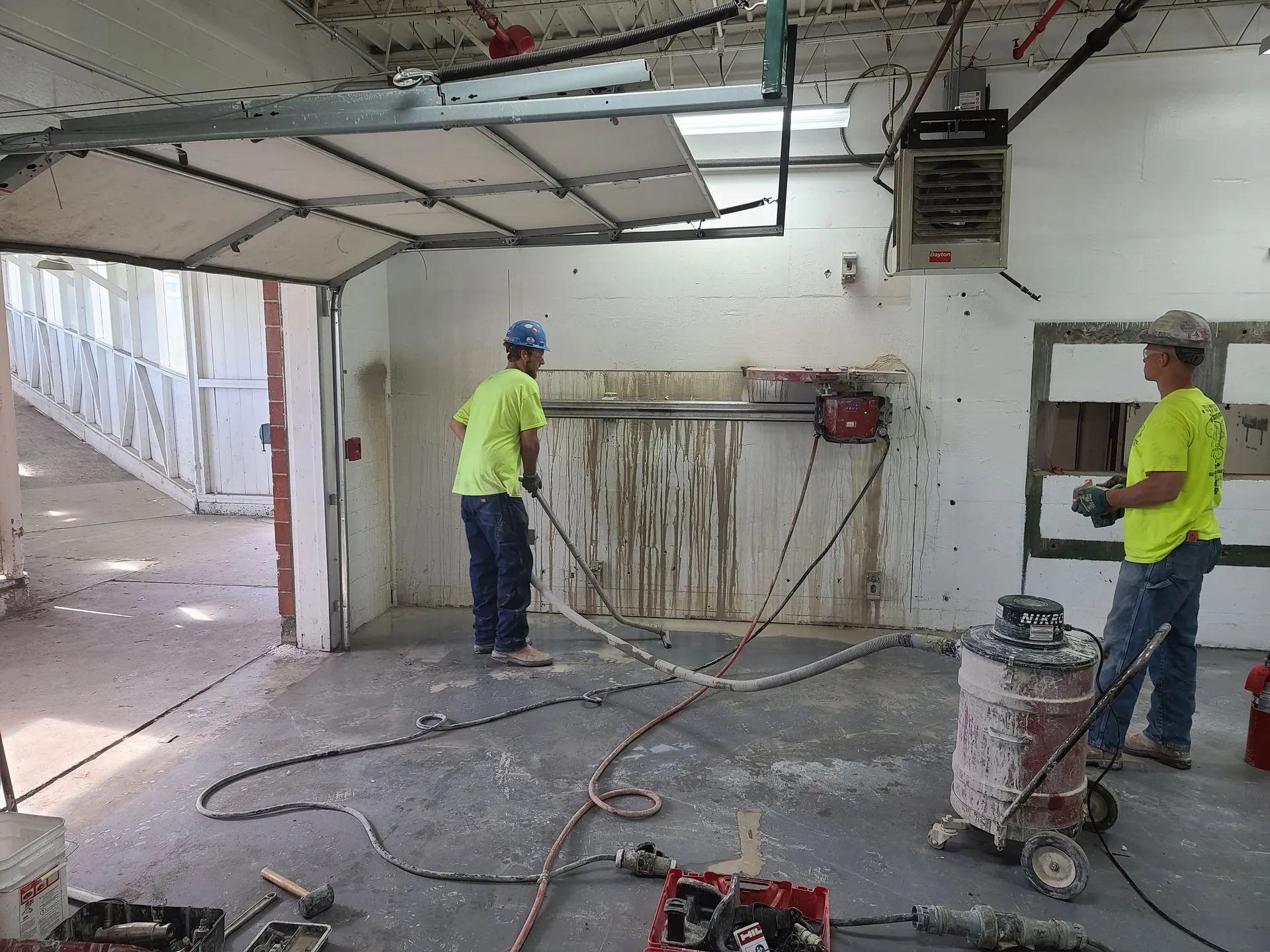
When a commercial building needs a new door, window, HVAC duct, or utility access point cut through a concrete or masonry wall, the method used to make that opening matters more than most people realize. The wrong approach can damage surrounding structure, delay other trades, or create safety risks that ripple across the entire job site. Wall sawing is the method that consistently delivers clean, controlled, and structurally sound openings in commercial settings, and understanding why helps contractors and facility managers make smarter decisions before work begins. What Is Wall Sawing and How Does It Work? Wall sawing uses a track-mounted circular saw fitted with a diamond-tipped blade to cut through vertical or steeply angled concrete surfaces. The saw travels along a guide track that is secured directly to the wall, which means the blade follows a fixed, predetermined path throughout the entire cut. This track system is what separates wall sawing from other cutting methods. Because the saw cannot shift, drift, or wander, every cut comes out straight, square, and consistent in depth. Operators can set the exact depth before cutting begins, which is especially important when working near utilities, post-tension cables, or rebar that sits close to the cut line. At KC Coring & Cutting, both electric and hydraulic wall saws are used depending on the environment. Electric saws are preferred for interior commercial spaces where fumes and air quality matter. Hydraulic systems are brought in when greater power output is needed for thicker or more heavily reinforced walls. Why Does the Cutting Method Matter in Commercial Construction? In commercial construction, a structural opening is never just a hole. It connects to load paths, adjacent trades, building schedules, and occupant safety. A cut made with the wrong tool or by an undertrained crew can crack surrounding concrete, compromise a load-bearing element, or damage conduit running through the wall. Many general contractors in the Kansas City area have learned this the hard way when rough methods like jackhammers or angle grinders are used for wall penetrations. These tools transfer impact force outward through the surrounding material. In occupied buildings, that vibration alone can cause hairline fractures, dislodge ceiling tiles, or interfere with sensitive equipment in adjacent rooms. Wall sawing, by contrast, produces minimal vibration. The diamond blade cuts by abrasion rather than impact, which means the energy stays focused at the blade contact point rather than radiating through the wall. What Types of Commercial Openings Require Wall Sawing? ot every wall opening calls for the same approach, but wall sawing covers the broadest range of commercial applications with consistent results. Door and window openings in concrete tilt-up buildings are among the most common uses. Retrofitting an existing commercial structure with a new storefront opening or loading dock access point requires straight cuts that match architectural drawings exactly. Even a quarter-inch deviation can cause problems with door frames, headers, or the masonry infill used to finish the opening. HVAC and mechanical penetrations through concrete core walls are another frequent application. These cuts need to hit specific coordinates without damaging the reinforcement structure on either side. Core drilling handles round penetrations, but when the opening needs to be rectangular or oversized, wall sawing is the right call. Utility access points in parking garages, hospitals, and municipal buildings across Kansas City often require wall sawing as well. These environments have strict requirements around noise, dust, and structural disturbance, all of which wall sawing handles better than traditional demolition methods. How Does Wall Sawing Handle Reinforced Concrete? Reinforced concrete is the standard in commercial construction, and it presents real challenges for wall cutting crews. Rebar runs horizontally and vertically through most structural walls. Post-tension cables add another layer of complexity in modern slabs and walls because cutting one can release stored tension and cause immediate, serious structural damage. This is why the process at KC Coring & Cutting always starts with a Ground Penetrating Radar scan before any blade touches the wall. GPR detects rebar placement, post-tension cables, conduit, and other embedded objects. The scan data tells the crew exactly where these elements sit so the cut path can be planned around them. Once the scan is complete, the operator marks the wall and mounts the track. Diamond blades are selected based on the specific concrete mix, aggregate type, and reinforcement density. A blade chosen for lightly reinforced concrete will wear faster and cut less cleanly through a heavily reinforced wall, which is a detail that often gets overlooked when less experienced crews take on these jobs. Wet cutting is used throughout the process to cool the blade, suppress silica dust, and extend blade life. Slurry containment keeps the work area clean and prevents water from migrating into adjacent spaces. What Are the Depth Capabilities of Wall Sawing?