
The Future of Construction Safety: How Data, Sensors, and AI Are Reducing Jobsite Risks

SalesRep-Admin • June 24, 2025

Share this article

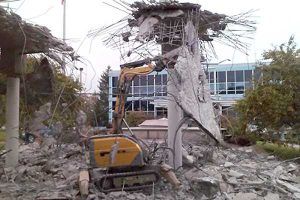
Brokk Demolition


The construction industry has always carried risk. Every day, crews operate heavy equipment, work around live utilities, and manage environmental factors that can change by the minute. What is changing now is how we monitor and prevent those risks.


Data, sensors, and artificial intelligence are beginning to redefine how safety is managed on the jobsite. They are not replacing people — they are giving us better tools to protect them. For companies like Kansas City Coring & Cutting, this evolution represents the next phase in how we plan, track, and deliver safer work.


A Smarter Approach to Jobsite Awareness


In the past, safety depended almost entirely on observation. Supervisors watched crews, identified potential hazards, and relied on experience to prevent problems. While that still matters, technology now gives us visibility that goes far beyond what the human eye can track.


We are already seeing this shift in how jobsite data is collected. Equipment today can record vibration, heat, and torque levels in real time. Wearable sensors and small digital tags can provide live feedback on air quality, noise exposure, or proximity to moving equipment.


These tools give foremen and project managers an immediate understanding of what is happening across a site. If a saw is overheating, if air quality drops, or if a worker enters a restricted zone, alerts can be sent automatically. Instead of reacting after something goes wrong, the system helps prevent it in the first place.


How Data Is Changing Equipment Safety


One of the biggest safety advances we see is in how our own tools communicate. Our saws, drills, and coring rigs now come equipped with sensors that help us monitor performance and anticipate maintenance needs.


By tracking vibration and temperature data, we can tell when a blade or bit is wearing down or if a bearing is starting to fail. Addressing that early keeps equipment from breaking mid-job, which reduces both downtime and injury risk. It also means fewer unplanned repairs, cleaner cuts, and safer, more predictable performance.


This kind of predictive awareness is becoming standard on professional jobsites. It is not just about working smarter — it is about keeping the team safe while maintaining consistent productivity.


AI and Predictive Safety Insights


Artificial intelligence is starting to play a role in how companies manage safety information. Many of the systems being tested today can analyze site data and identify patterns we might not catch on our own.


For example, if vibration levels consistently spike during certain types of cuts, or if tool sensors detect higher stress in specific conditions, AI can flag those patterns as future risks. Over time, that helps refine how crews approach similar situations.


At Kansas City Coring & Cutting, we see enormous value in this kind of predictive capability. It allows us to fine-tune processes, train more effectively, and stay ahead of potential hazards instead of reacting after the fact.


The Rise of Sensor-Based Safety Systems


We are also watching the rapid improvement of sensor networks that keep workers safer in active environments. On a busy jobsite, dozens of moving parts operate simultaneously — vehicles, equipment, and personnel often share tight spaces.


Proximity sensors can detect when a worker or machine gets too close to another object and trigger a warning. Environmental sensors can track dust, temperature, and noise levels to ensure we remain compliant with health standards.


For companies like ours, which operate heavy cutting and coring machinery, these systems provide a second layer of protection. They add precision and awareness in environments where conditions change constantly.


The Next Step: Real-Time Safety Dashboards


As technology continues to advance, the next logical step will be integrating all this data into unified dashboards. Supervisors will be able to see equipment status, worker locations, air quality, and performance metrics from one screen.


That level of visibility will make coordination faster and safety management more proactive. It will also create a real-time record of site conditions, inspections, and maintenance history. For clients and contractors alike, that transparency builds confidence and accountability.


Kansas City Coring & Cutting’s Data-Driven Safety Commitment


At Kansas City Coring & Cutting, our safety record has always been built on preparation and awareness. Technology is now enhancing both. Our goal is to use these innovations to strengthen what already works — not replace it.


We are gradually integrating digital monitoring into our daily operations. Equipment sensors help us track tool health. Wearable monitoring options are being evaluated for high-risk environments. And data from each job is being logged to help us continuously improve training, processes, and site planning.


Our .78 EMR rating is proof that safety is not just a slogan for us — it is part of how we operate. As we incorporate more intelligent systems, we are raising that standard even further.


Looking Ahead


The future of construction safety will not come down to a single piece of technology. It will come from how companies combine tools, data, and human experience to make smarter decisions in real time.


Sensors and AI can give us faster insight. Data can help predict equipment wear or detect unsafe conditions. But it still takes trained professionals to interpret that information and act decisively.


At Kansas City Coring & Cutting, we see technology as a tool that empowers our people — not one that replaces them. The more connected and informed our jobsites become, the safer and stronger the industry will be for everyone.

Recent Posts

April 9, 2026
Construction across Missouri and Kansas is evolving rapidly. What once relied on handheld saws and basic equipment now requires engineering precision, strict safety compliance, and advanced technology. As cities continue to expand and infrastructure projects increase, structural modifications demand far more than simply cutting through concrete. Today’s environments require careful planning and controlled execution to ensure that every adjustment supports the integrity of the surrounding structure.  Project managers, engineers, and facility operators now expect processes that protect both the building and the people inside it while maintaining uninterrupted operations. Older cutting methods often produced heavy dust, excessive vibration, and inconsistent results, creating risks for workers and nearby occupants. Modern standards now focus on solving these challenges through technology-driven practices that prioritize environmental protection, structural accuracy, and operational safety. The Industry Challenge For Dust, Noise, and Structural Risk Concrete cutting traditionally produced significant airborne particles. These fine particles contain crystalline silica, a material known to pose serious respiratory risks when inhaled. Construction sites historically struggled to contain this dust, especially in enclosed environments. Noise and vibration have also been persistent issues. Conventional demolition tools transfer force throughout surrounding structures, increasing the possibility of cracking or weakening nearby surfaces. In occupied buildings, excessive sound levels can interrupt business operations or create safety concerns for occupants. Another major challenge involves hidden infrastructure inside concrete. Reinforcing steel, electrical conduits, plumbing systems, and post-tension cables often run through slabs and walls . Cutting blindly risks damaging these components, potentially causing structural hazards or costly project delays. These issues created the need for new operational standards capable of addressing environmental safety, precision, and structural protection simultaneously. Modern Dust Control Solutions One of the most visible improvements in current concrete cutting technology is the near elimination of airborne debris. Job sites now prioritize air quality through sophisticated equipment designed to capture particles immediately when they form. Integrated Dust Extraction Technology Modern cutting equipment incorporates vacuum shrouds built directly into the tool housing. Instead of attaching external accessories, the entire system is engineered to pull particles directly from the blade contact point. Industrial-grade HEPA filtration units connect to these saws, capturing extremely small particles before they enter the air. These filters are capable of trapping particles measuring only fractions of a micron, ensuring that hazardous materials remain contained. This approach has transformed indoor concrete work. Commercial spaces such as office basements, mechanical rooms, and underground corridors can now undergo structural modifications without contaminating surrounding environments. Wet-Cutting Advances Water-assisted cutting has been used in concrete work for many years, but modern technology has significantly improved how the process is controlled and managed. Today’s equipment focuses on precision water flow and proper slurry containment, allowing contractors to maintain cleaner job sites while protecting surrounding structures. These improvements help reduce airborne particles while ensuring that moisture does not spread beyond the work area. Improved water flow control: Modern cutting systems regulate water distribution to keep blades cool and reduce dust more effectively. Advanced slurry management: Contractors use slurry vacuums and containment barriers to capture excess water and debris. Protection for surrounding surfaces: Proper runoff control prevents water from spreading across floors or leaking into lower levels. Cleaner and safer work environments: Efficient slurry handling maintains dust suppression while protecting finished areas of a building.
By Dinesh K March 6, 2026
How Ground Penetrating Radar (GPR) Improves Concrete Cutting Safety & Accuracy
January 12, 2026
The Role of Slab Sawing in Concrete Floor Drainage Corrections
December 23, 2025
What Brokk Demolition Is and Why It Is Safer Than Traditional Methods
December 23, 2025
How Precision Concrete Cutting Reduces Structural Damage on Job Sites
By SalesRep-Admin October 8, 2025
In the construction industry, safety is not just a legal requirement — it is a reflection of a company’s culture, training, and professionalism. One of the most accurate ways to measure a contractor’s safety performance is through something called EMR, or Experience Modification Rate. If you have ever reviewed a contractor’s prequalification paperwork, you haveRead More The post Understanding EMR: What It Is, Why It Matters, and Why a .78 Is Exceptional first appeared on Kansas City Coring & Cutting .
By SalesRep-Admin September 1, 2025
Safety on a concrete cutting jobsite does not start with signs, checklists, or rules — it starts with the equipment itself. Every saw, drill, and core rig is a potential hazard if not properly maintained. While many companies treat maintenance as a routine policy, at Kansas City Coring & Cutting, we see it as aRead More The post Why Equipment Maintenance Is a Safety Practice, Not Just a Policy first appeared on Kansas City Coring & Cutting .
By SalesRep-Admin August 12, 2025
Concrete cutting is one of the most critical and underestimated components of a construction project. A single mistake in this phase can cause costly delays, structural damage, or safety violations. Yet many contractors still select cutting partners based on price alone, rather than capability, experience, and professionalism. If your project involves concrete cutting, coring, orRead More The post The Contractor’s Guide to Hiring a Qualified Concrete Cutting Partner first appeared on Kansas City Coring & Cutting .
By SalesRep-Admin July 10, 2025
Concrete cutting and coring inside an occupied building require more than just precision. They demand planning, communication, and complete control over dust, noise, and vibration. Every move affects someone nearby — whether it is an office employee, hospital staff, or a tenant running a business. At Kansas City Coring & Cutting, we have spent decadesRead More The post Working Inside Occupied Buildings: Noise, Dust, and Coordination Strategies first appeared on Kansas City Coring & Cutting .
By SalesRep-Admin May 12, 2025
Kansas City is experiencing one of its most ambitious growth periods in decades. From revitalized neighborhoods to new transit infrastructure, the city is building momentum that is transforming both its skyline and its streets. At the center of this evolution is a renewed demand for precision construction services — and concrete cutting and coring haveRead More The post How Kansas City’s Growth Is Driving Demand for Advanced Concrete Services first appeared on Kansas City Coring & Cutting .
Show More