
Concrete coring is one of the most precise and essential services in modern construction. From drilling holes for plumbing and electrical systems to extracting core samples for analysis, this process makes it possible to modify or inspect structures without compromising their integrity.
At Kansas City Coring & Cutting, we specialize in core drilling that combines accuracy, safety, and efficiency. This guide explains how concrete coring works, the equipment involved, the main techniques used, and the applications that make it such a vital part of construction and renovation.
What Is Concrete Coring
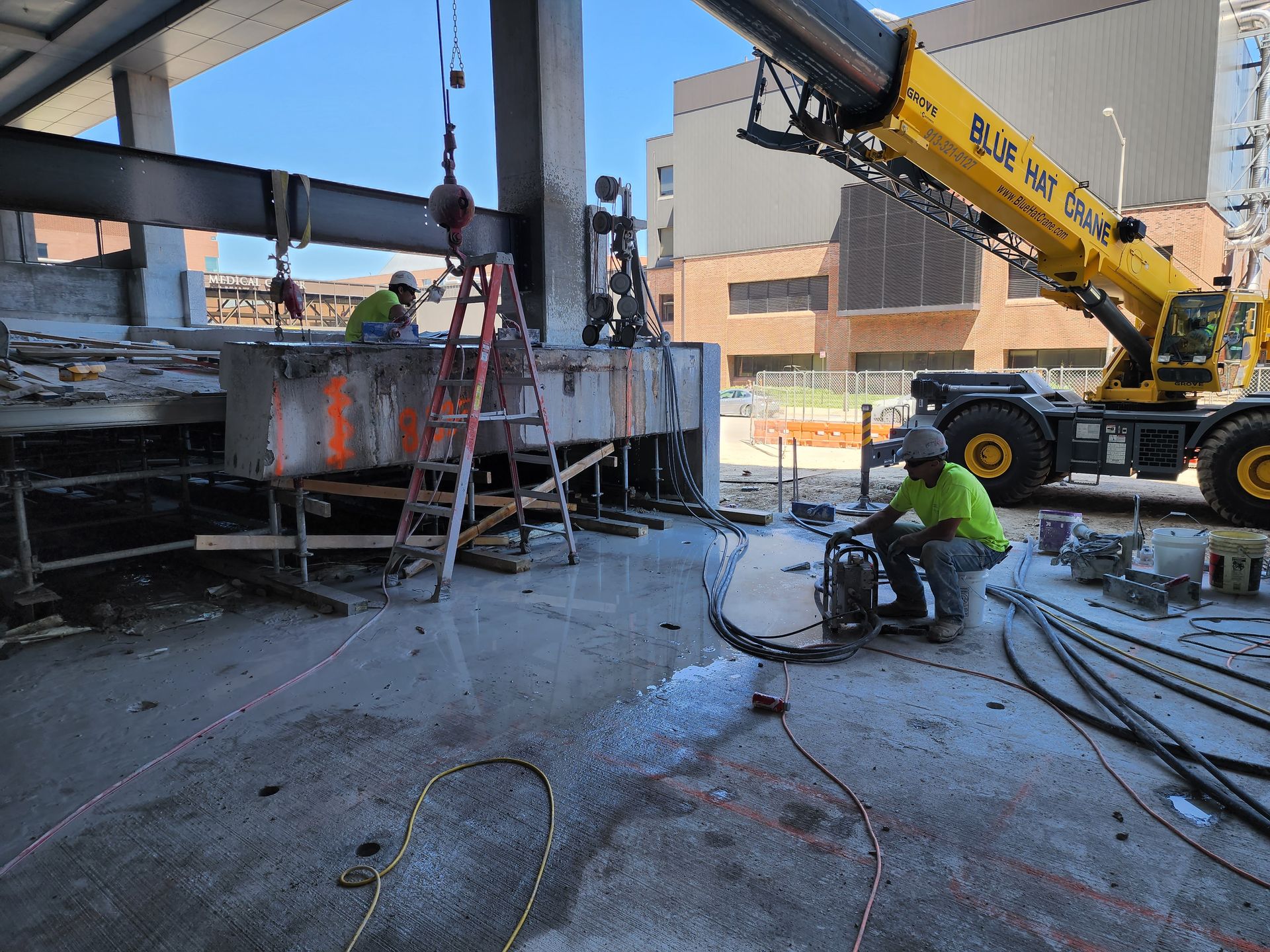
Concrete coring, also called core drilling, is a process that uses a hollow, cylindrical drill to remove a round section of concrete, masonry, or asphalt. The result is a clean, smooth hole that allows for the installation of utilities, anchor bolts, HVAC systems, or structural analysis testing.
Unlike hammer drilling or jackhammering, core drilling uses diamond-tipped bits and controlled rotation to cut cleanly through reinforced concrete with minimal vibration. This method is fast, quiet, and highly accurate, which is why it’s used in hospitals, data centers, and other sensitive environments where precision matters most.
The Science Behind Core Drilling
Concrete is made of cement, aggregate, sand, and often steel reinforcement. This combination makes it strong, but it also means it cannot be penetrated effectively with standard drilling tools. Core drilling overcomes this challenge through diamond technology.
Synthetic diamonds are embedded into a metal bond at the edge of the core bit. As the bit rotates, friction wears away the metal bond, continuously exposing new diamonds. This process keeps the cutting surface sharp while water is applied to cool the bit, control dust, and carry debris out of the hole.
Because the cutting action is smooth and controlled, there is little risk of cracking or damaging surrounding material.
Common Coring Techniques
Different projects require different coring methods depending on the material, access, and purpose. The most common include: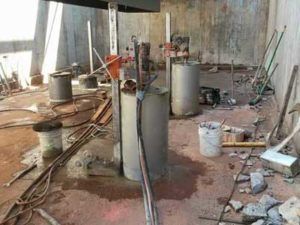
Vertical Coring
This is the standard approach for drilling straight down through floors, slabs, or pavement. It’s commonly used for plumbing, drainage, or utility penetrations where holes must pass vertically through the structure.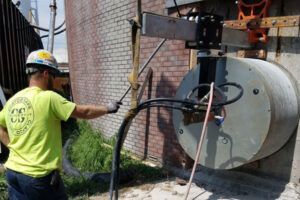
Horizontal Coring
Horizontal coring is used for walls and beams where openings are needed for conduit, anchor bolts, or reinforcement analysis. It’s often performed in tandem with wall sawing to create large or continuous openings.
Angled Coring
Certain projects require coring at an angle to avoid obstacles or reach specific targets. This method is especially useful when drilling around existing reinforcement, under obstructions, or through complex architectural features.
Stitch Drilling
For larger openings that exceed the diameter of a single core bit, multiple overlapping holes are drilled in a pattern to form one continuous cut. Stitch drilling provides an efficient alternative to sawing in areas with limited space or structural complexity.
Types of Core Drilling Equipment
Professional-grade coring equipment allows technicians to maintain precision, power, and safety across different environments.
Core Drills and Rigs:
Heavy-duty machines powered by electric, hydraulic, or pneumatic systems. Mounted securely to walls, floors, or ceilings for stability and accuracy.
Diamond Core Bits:
The heart of the process. These bits come in multiple diameters and bond hardness levels to match the density of the material being drilled.
Water Management Systems:
Used in wet coring to cool the bit and suppress dust. Water also flushes out slurry, keeping the work area clean and preventing overheating.
Vacuum and Anchor Mounts:
These hold the coring rig in place, ensuring alignment and reducing vibration for a smooth, steady cut.
Ground Penetrating Radar (GPR) Scanners:
Essential for detecting embedded materials like rebar, post-tension cables, and conduit before drilling begins.
When to Use Concrete Coring
Concrete coring is used across nearly every sector of construction. Common applications include:
Creating openings for plumbing, electrical, and HVAC installations
Installing anchor bolts, dowels, or handrails
Removing core samples for material strength testing
Creating routing paths for communication and fiber optic cables
Making access holes for maintenance and inspection
Controlled demolition or structural modification
Because it is both precise and non-destructive, core drilling is ideal for projects that require accuracy and cleanliness.
The Importance of Safety and Scanning
Cutting or drilling into concrete blindly can be dangerous. Striking rebar, post-tension cables, or live conduit can cause serious damage or injuries. That is why Kansas City Coring & Cutting performs Ground Penetrating Radar (GPR) scanning before every coring job.
GPR allows us to identify hidden reinforcement, locate utilities, and determine the safest path for drilling. This step eliminates uncertainty and ensures complete control over the process.
We also use wet coring methods exclusively to reduce dust, prevent overheating, and maintain air quality. These techniques comply fully with OSHA silica dust standards and keep jobsites safe and efficient.
The KC Coring Precision Process
Every coring job we handle follows a proven, methodical approach designed to guarantee accuracy and protect the surrounding structure.
Assessment and Scanning:
We evaluate the site and scan with GPR to locate embedded materials.
Setup and Alignment:
Our rigs are mounted securely to ensure perfect alignment and stability.
Wet Coring and Drilling:
Using diamond-tipped bits and steady water flow, we drill precisely to the required diameter and depth.
Cleanup and Verification:
Slurry and debris are removed, and we verify hole quality, diameter, and placement accuracy.
This process allows us to maintain consistency across every project, from small residential cores to large-scale commercial installations.